
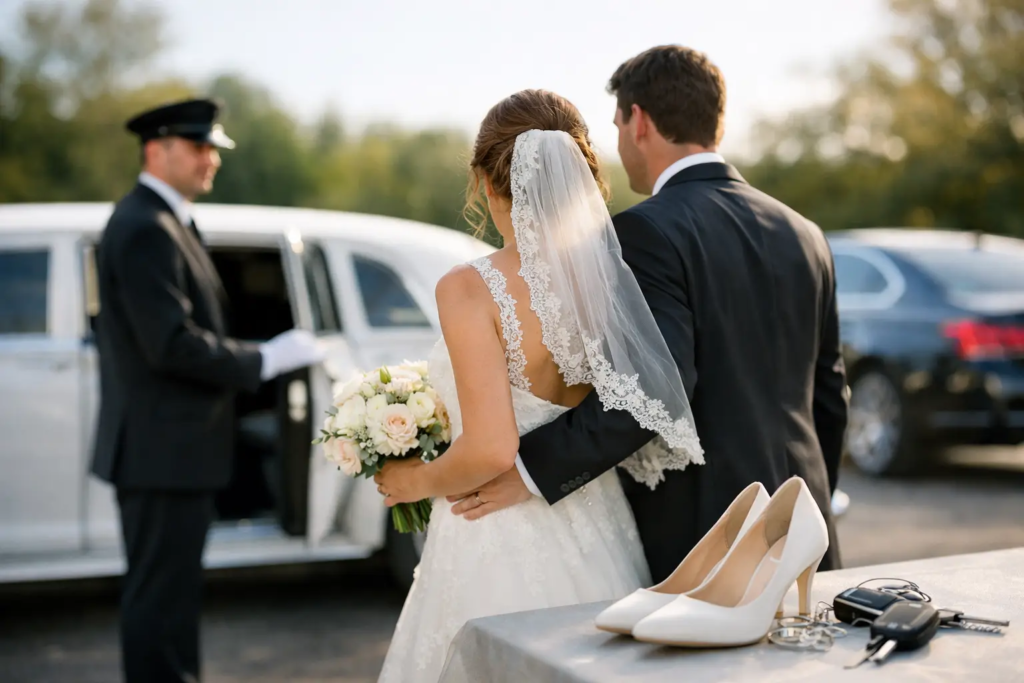
The easiest way to throw off a wedding day timeline is to assume everyone will simply get where they need to be. A good wedding transportation planning guide starts there – not with the car itself, but with the movement of people, the pace of the day, and the moments that cannot run late.
For many couples, transportation gets handled late in the planning process. That is understandable, but it creates avoidable stress. Ceremony start times, photo locations, hotel blocks, guest shuttles, and the couple’s exit all depend on a transportation plan that fits the day as it will actually unfold. The right service adds elegance and comfort, but just as importantly, it protects the schedule.
What a wedding transportation planning guide should cover
Wedding transportation is rarely one ride from point A to point B. It is often a mix of needs with different priorities. The couple may want a polished arrival vehicle. The wedding party may need dependable group transportation between a hotel, ceremony, and reception. Family members may need easier access and a more comfortable boarding experience. Guests may need a shuttle if parking is limited or if the reception includes alcohol and multiple venues.
That is why transportation planning works best when you separate style decisions from logistics decisions. A stretch limousine may be perfect for the wedding party entrance, while a sprinter van or shuttle-style vehicle may be the better choice for guests. An executive SUV may be ideal for parents or grandparents who need a quiet, comfortable ride and a straightforward pickup.
The trade-off is simple. If you choose only for appearance, the day can become harder to manage. If you choose only for capacity, you may miss the polished experience you wanted. The best plan usually combines both.
Start with your wedding day timeline
Before choosing vehicles, map the day in order. Include hotel departures, hair and makeup completion, first look, ceremony arrival, family photo travel, cocktail hour movement, reception start, and the final send-off. Then build in buffer time.
This is where many couples underestimate what transportation needs to do. A 20-minute drive on a normal weekday may not be a 20-minute drive on a Saturday with event traffic, downtown congestion, stadium activity, or waterfront backups. In Washington, weather also matters. Rain changes loading times, walking times, and road pace.
A professional chauffeur service is valuable because it accounts for those realities. Reliable transportation is not just about having a nice vehicle waiting at the curb. It is about planning pickups around actual conditions and making sure the people who must arrive on time do exactly that.
If your ceremony and reception are at the same venue, your needs may be simple. If you have a church ceremony, an off-site photo session, and a reception elsewhere, transportation becomes a central part of the event flow. In those cases, hourly service often makes more sense than piecing together one-way trips.
Build around the people who cannot be late
The first priority group is usually the couple, officiant, and wedding party. The second is immediate family. Guests come next, especially if they are traveling from a hotel block or parking is limited at the venue.
That order matters. If the budget does not allow transportation for everyone, reserve it first for the people whose timing affects the entire event. A late guest is frustrating. A late wedding party changes the ceremony start.
Choose the right vehicles for each part of the day
One of the most practical parts of any wedding transportation planning guide is matching vehicles to use cases. Not every wedding needs a limousine, and not every group should be placed in the largest vehicle available.
For the couple, a luxury sedan or SUV can be the right fit if the goal is privacy, comfort, and a clean, elegant arrival. For a larger wedding party, a stretch limousine gives the occasion more presence and keeps the group together. If you have a bigger bridal party or want room to move comfortably with dresses, suits, bouquets, and personal items, a sprinter van or party bus may be more functional than a traditional stretch.
Guest transportation is a separate conversation. If many guests are staying at one hotel, coordinated shuttle service is often the simplest option. It reduces parking pressure, helps everyone arrive in the same window, and lowers the risk of delayed starts. It also helps after the reception, when a dependable ride back to the hotel becomes more than a convenience.
There is no single best vehicle category for every wedding. It depends on the number of passengers, venue access, dress volume, travel distance, and the kind of experience you want. A vehicle that looks perfect in photos may not be ideal for a rural venue with limited turnaround space or a city venue with tight loading zones.
Don’t overlook venue access and pickup logistics
A polished wedding day experience often comes down to details guests never notice. Where can the vehicle legally stop? Is there room for a stretch vehicle to turn around? Will multiple pickups create delays at a busy hotel entrance? Is there a covered loading area if it rains?
These questions matter because transportation delays are not always road delays. They often happen at the curb. Large venues may have designated access points. Downtown hotels may have shared loading zones. Private estates and wineries may have narrow drives or uneven approaches.
This is one reason experienced local transportation providers bring so much value. They understand how different venue types function in real conditions, not just on paper. A trusted provider can help identify whether a luxury SUV, sprinter van, limousine, or larger group vehicle is the smartest fit for a particular route.
Plan for waiting time, not just drive time
Many weddings involve pauses between movements. The wedding party may need transportation to the ceremony, then photos, then the reception. Parents may need one arrival and one late-night return. Guests may need a scheduled shuttle loop rather than on-demand service.
When those gaps exist, hourly booking is often more reliable than arranging separate one-way reservations. It keeps the vehicle and chauffeur assigned to your event and reduces the risk of timing gaps between segments. For a wedding day, that consistency is often worth more than trying to trim costs with a patchwork plan.
Guest transportation can be a major advantage
Couples sometimes treat guest transportation as optional until the final weeks. In some weddings it is optional. In others, it is one of the smartest investments in the entire plan.
If your venue has limited parking, if many guests are from out of town, or if the reception involves significant travel between locations, organized transportation improves the experience immediately. Guests do not have to navigate unfamiliar roads, find parking, or coordinate carpools in formalwear. They can simply arrive, celebrate, and return safely.
This matters even more when the wedding includes hotel blocks. A scheduled shuttle from hotel to venue and back gives structure to the day and reduces confusion. It also helps the event stay on time, because guest arrivals are less scattered.
For couples who want a more elegant and dependable experience, transportation is part of hospitality. It tells guests that comfort and convenience were considered, not left to chance.
When to book wedding transportation
As a rule, book transportation once your ceremony time, reception venue, and hotel blocks are confirmed. Waiting too long limits vehicle choices, especially during peak wedding season, prom season, and other high-demand weekends.
Booking earlier also gives you time to adjust the plan as the guest count and timeline develop. You may start by thinking you need one limousine, then realize that family transportation and hotel shuttle service would remove much more stress from the day.
When requesting a quote, be ready with passenger counts, venue addresses, desired pickup times, and a rough timeline. The clearer the information, the easier it is to recommend the right service level. Hope Limo Services works with weddings across Washington where couples want both luxury presentation and dependable execution – and that combination matters most when the schedule is full.
Questions worth asking before you reserve
Ask how vehicle capacity is counted in real use, especially if formalwear, gowns, and personal items take up space. Ask how overtime is handled if the reception runs long. Ask what pickup coordination looks like for hotels, churches, and private venues. If you are arranging guest shuttles, confirm whether the service will be a dedicated loop or a fixed schedule.
You should also confirm who the transportation is truly for. Sometimes one elegant vehicle for the couple plus a practical group vehicle for the wedding party is the best mix. Other times, guest transportation creates more value than a specialty arrival car. It depends on your venue, your timeline, and where delays would cause the most problems.
A strong wedding transportation plan does more than move people. It creates breathing room in a day that tends to move fast and carry high expectations. When the right vehicles, timing, and service are in place, the day feels calmer, more comfortable, and more polished from the first pickup to the final ride home.
If you want your wedding day to feel elegant without feeling rushed, transportation is not a last-minute detail. It is one of the quiet decisions that helps everything else go right.